
SPEAKERS
CyCAT Partner Speakers

Fausto Giunchiglia, Advanced Partner
University of Trento
Language Diversity
Fausto Giunchiglia is a Professor of Computer Science, University of Trento, ECCAI fellow, member of the Academia Europaea. Fausto studied or had positions at the Universities of Genoa, Stanford, Edinburgh. His research is on knowledge management with a focus on managing diversity. He holds around 10 Best Paper Awards, gave more than 50 invited talks in international events; chaired more than 10 international events, among them: WWW 2021, KSEM 2018, ODBASE 2008, IJCAI 2005, Context 2003, AOSE 2002, Coopis 2001, KR&R 2000, FLOC 1999; he sits as editor or on the editorial board member of around 10 journals, among them: Journal of Data Semantics, Journal of Autonomous Agents and Multi-agent Systems, Journal of applied non Classical Logics, Journal of Software Tools for Technology Transfer, Journal of Artificial Intelligence Research. He was member of the IJCAI Board of Trustees (01-11), President of IJCAI (05-07), President of KR, Inc. (02-04), Advisory Board member of KR, Inc., Steering Committee of the CONTEXT conference.
Paper by Fausto:
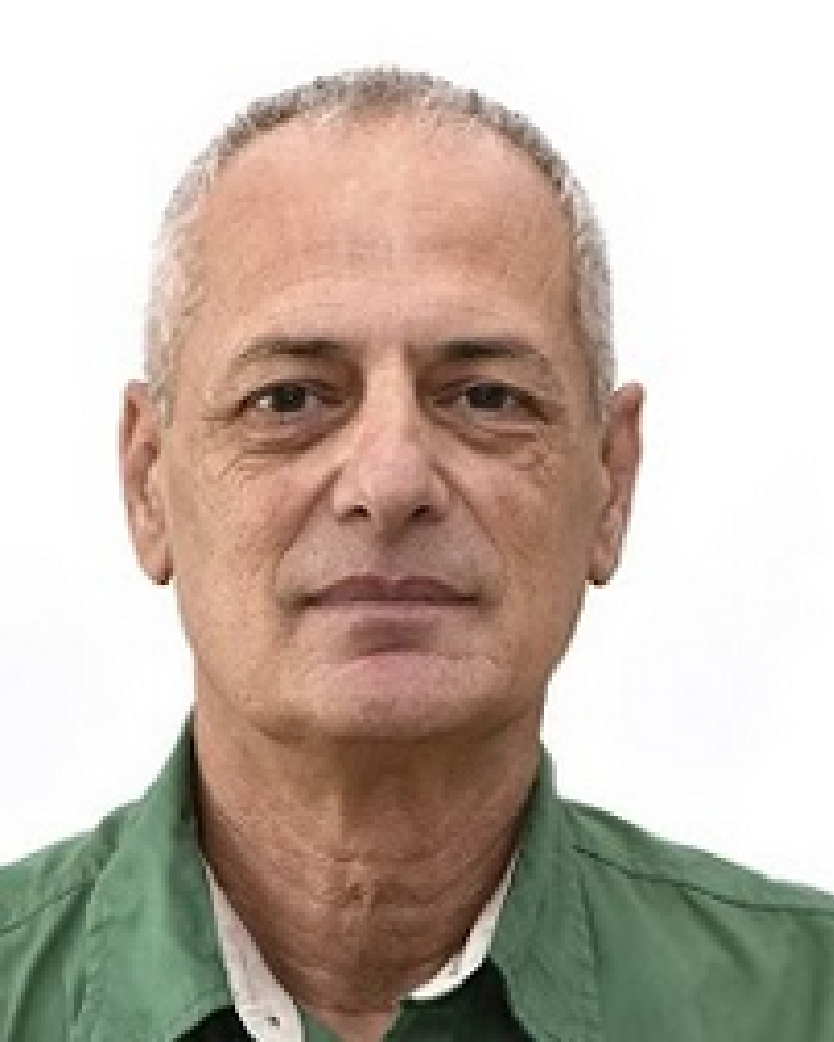
Tsvi Kuflik, Advanced Partner
University of Haifa
Information Systems
Prof. Tsvi Kuflik is a Professor and former head of the Department of Information Systems at the University of Haifa, Israel. His main areas of research are Ubiquitous User Modelling and Intelligent User Interfaces. For over than ten years Tsvi is leading a research group at the University of Haifa, focusing on “Active Museum” – applying novel computing and communication technology for supporting museum visitors. Prof. Kuflik is the author of over 200 referred publications in journals and conferences and in addition to being a co-organizer of the series of PACTH workshops during the past seven years. Experience with workshop/conference organization: General co-chair of IUI 2017, 2014, PC co-chair of UMAP 2014, chair of international information systems conferences held in Israel – NGITS 2006 and NGITS 2009, co-organizer of a series of workshops on Ubiquitous User Modeling co-located with ECAI 2006, UM 2007, IUI 2008, and personalization in cultural heritage, co-Organizer of the RecTour workshops series co-located with RecSys over the past three years, workshops co-chair of IUI 2009 and IUI 2010 and a member in the program committee of numerous national and international conferences.
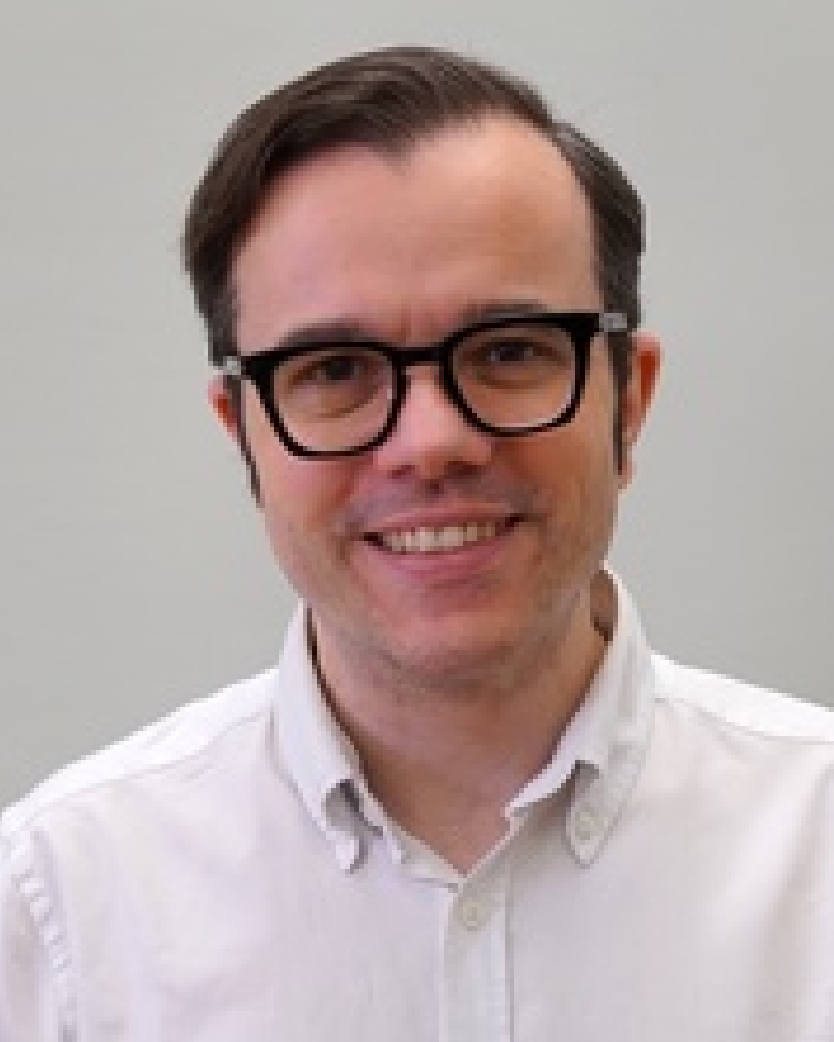
Michael Rovatsos, Advanced Partner
University of Edinburgh
Artificial Intelligence
Michael Rovatsos is a Reader at the School of Informatics of the University of Edinburgh and Director of the Bayes Centre, the University’s innovation centre for Data Science and AI. He has a track record of over 90 publications in AI (mostly in multiagent systems, automated planning, and adaptive online collaboration platforms) , and has been involved in externally funded projects worth over £17m, out of which he has personally held £2.5m as PI. His current work focuses on developing fair resource allocation algorithms, conducting empirical research into users’ perceptions of algorithmic fairness, and developing AI-assisted methods for the ethical self-regulation of online platforms. He is an Associate Editor of the Knowledge and Information Systems Journal, was recently Blue Sky Track Co-Chair of the AAMAS 2018 conference, and is Conference Coordinator for ACM SIGAI. He obtained his PhD in Informatics from the Technical University of Munich in 2004.
Paper by Michael:

Jo Bates, Advanced Partner
University of Sheffield
Information Studies
Jo Bates is a Senior Lecturer in Information Politics and Policy based at the University of Sheffield Information School. My research examines two interrelated factors (1) the socio-material factors that constitute how data are produced, used and move between different people and organisations, and how particular cultural constructs come to take on substance in data through the activities of practitioners, and how and why efforts are made to institutionalise specific forms of data practice in the form of data policies and legislation, and (2) the actual and potential socio-material consequences of these emergent forms of data practice and governance.
Paper by Jo:
Data journeys: Capturing the socio-material constitution of data objects and flows

Frank Hopfgartner, Advanced Partner
University of Sheffield
Data Science, Recommender Systems
Frank Hopfgartner is a Senior Lecturer in Data Science at the Information School of the University of Sheffield. His research to date can be placed in the intersection of information systems (e.g., information retrieval and recommender systems), content analysis and data science. He has (co-) authored over 150 publications in the above-mentioned research fields, including a book on smart information systems, various book chapters, and papers in peer-reviewed journals, conferences, and workshops. To date, he has successfully acquired over £1 Million in research funding from national and international sources to support his research.
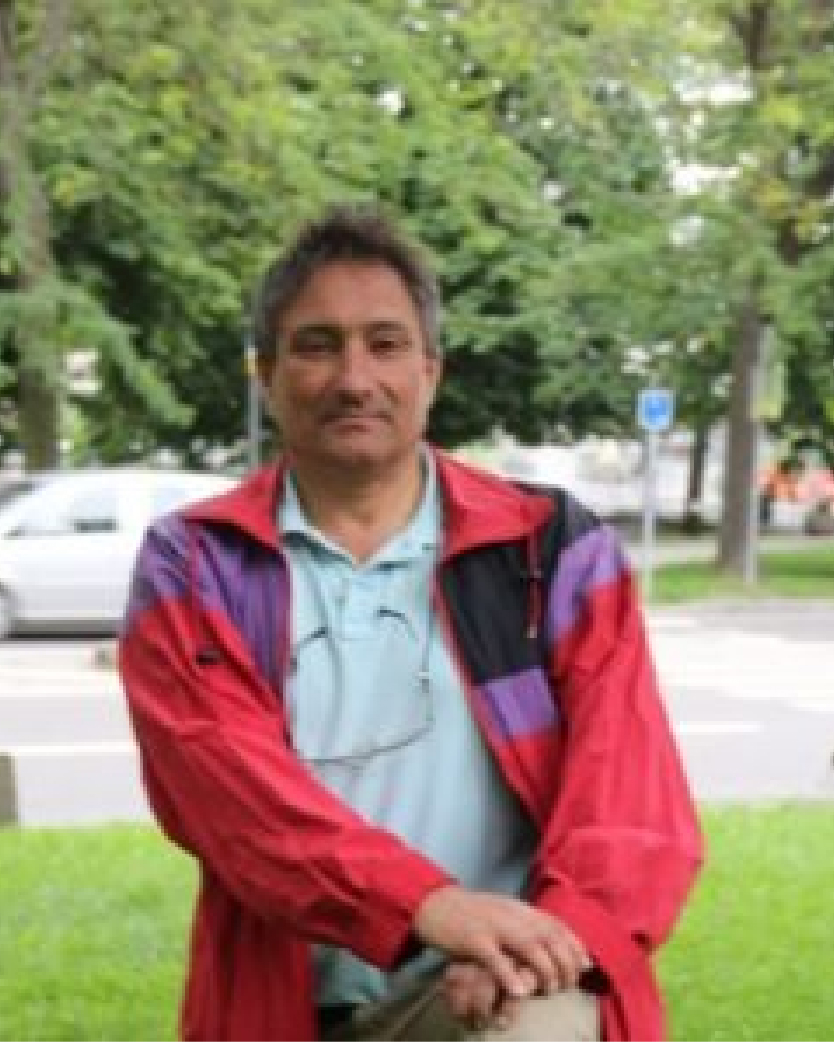
Alan Hartman, Senior Researcher
University of Haifa
Information Systems
Alan Hartman is a senior lecturer at the University of Haifa, Department of Information Systems and an adjunct professor at the Afeka Academic College of Engineering. He completed his Ph. D. in mathematics at the University of Newcastle, Australia. He joined the IBM Haifa Research Lab in 1983. His industrial research focused on storage technology, mathematical optimization, hardware and software verification, and model based engineering. In parallel, he continued his mathematical research into combinatorics. He spent almost 3 years at the IBM India research lab in Bangalore serving as the Services Science, Management, and Engineering (SSME) focal point for the IBM India Research Laboratory. He has held visiting positions in the Mathematics Department at the University of Toronto and at Telstra Research Labs. He has also coordinated and managed several European Commission research projects. He has published over 70 research papers and book chapters and holds 17 patents.
Paper by Alan:
Loizos Michael, Senior Researcher
Open University of Cyprus
Artificial Intelligence, Machine Learning, Theoretical Computer Science
Loizos Michael holds a Ph.D. from Harvard University, USA is an Associate Professor at Open University of Cyprus, where he founded and directs the Computational Cognition Lab. His research focuses on the principled study of cognitive processes associated with individual or collective intelligence — such as learning, reasoning, sensing, communication, cooperation — and how those are used by humans and other organisms in everyday life. Emphasis is placed on the development of computational models for various aspects of cognitive processes, and the analysis of the formal implications that such models have.
Paper by Loizos:

Michalinos Zembylas
Open University of Cyprus
Educational Theory, Teacher Education and Curriculum Studies
Michalinos Zembylas is a Professor of Educational Theory and Curriculum Studies at the Open University of Cyprus. He is also Honorary Professor at Nelson Mandela University in the Chair for Critical Studies in Higher Education Transformation. He has written extensively on emotion and affect in relation to social justice pedagogies, intercultural and peace education, human rights education and citizenship education. His recent books include: Psychologized Language in Education: Denaturalizing a Regime of Truth (with Z. Bekerman), and Socially Just Pedagogies in Higher Education (co-edited with V. Bozalek, R. Braidotti, and T. Shefer). In 2016, he received the Distinguished Researcher Award in “Social Sciences and Humanities” from the Cyprus Research Promotion Foundation.
Paper by Michalinos: