
Keynote Speakers
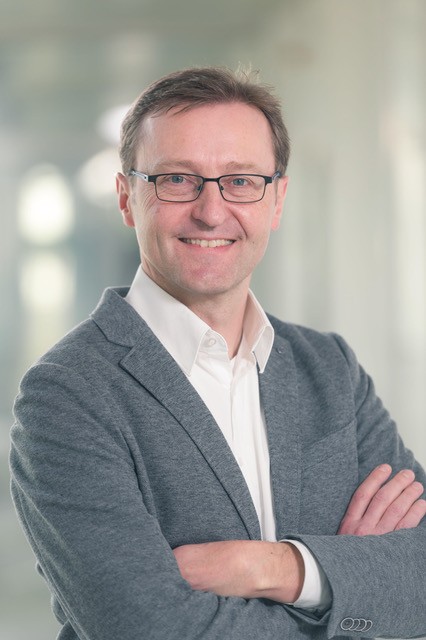
Steffen Staab
Institute for Artificial Intelligence,
University of Stuttgart
Title:
Managing Knowledge Spaces
Abstract:
In complex organisations or projects, one cannot assume that a single knowledge graph is simultaneously sufficiently complete and maintainable in an agile manner to represent all required data and knowledge. In analogy to data spaces, we therefore define a knowledge space to be the set of all knowledge graphs and applications that an organisation cares about, treated as one logical whole, even though the sources are heterogeneous and only partially integrated. We analyse one use case in AEC (architecture, construction, and engineering) from the Cluster of Excellence IntCDC and a use case in circular manufacturing (SFB 1574), and investigate means to manage sets of knowledge graphs and applications by a variety of efforts that range from principled ontology engineering, over federated and epistemic knowledge queries to knowledge graph foundation models.
Bio:
Steffen is a professor for Analytic Computing and heads the Institute for Artificial Intelligence, the Cluster of Excellence for „Data-integrated simulation science“ (SimTech), and the Research Initiative „Reflecting on Intelligent Systems“ (IRIS) at the University of Stuttgart, Germany. He also holds a chair for Web and Computer Science at the University of Southampton, UK. Steffen studied in Erlangen (Germany), Philadelphia (USA) and Freiburg (Germany) computer science and computational linguistics. From 1998 to 2020, Steffen worked as a project lead and lecturer at KIT, Germany, and as a professor for database and information systems at the University of Koblenz, Germany. He is a fellow of the ACM, ELLIS, EurAI and AAIA. In his research career, he has managed to avoid almost all good advice that he now gives to his team members. Such advice includes focusing on research (vs. company) or concentrating on only one or two research areas (vs. considering ontologies, knowledge graphs, Web science, data management, machine learning, simulation, and several more). Though, actually, improving how we understand and use text and data is a good common denominator for a lot of Steffen’s professional activities.
Changsheng Xu
Institute of Automation,
Chinese Academy of Sciences
Title:
Connecting Isolated Social Multimedia Big Data
Abstract:
The explosion of social media has led to various Online Social Networking (OSN) services. Today’s typical netizens are using a multitude of OSN services. Exploring the user-contributed cross-OSN heterogeneous data is critical to connect between the separated data islands and facilitate value mining from big social multimedia. From the perspective of data fusion, understanding the association among cross-OSN data is fundamental to advanced social media analysis and applications. From the perspective of user modeling, exploiting the available user data on different OSNs contributes to an integrated online user profile and thus improved customized social media services. This talk will introduce a user-centric research paradigm for cross-OSN mining and applications and some pilot works along two basic tasks: (1) From users: cross-OSN association mining and (2) For users: cross-OSN user modeling.
Bio:
Changsheng Xu is a professor of Institute of Automation, Chinese Academy of Sciences. His research interests include multimedia content analysis/indexing/retrieval, pattern recognition and computer vision. He has hold 50+ granted/pending patents and published over 600 refereed research papers including 200+ IEEE/ACM Trans. papers in these areas.
Prof. Xu serves as Editor-in-Chief of Multimedia Systems Journal and Associate Editor of ACM Trans. on Multimedia Computing, Communications and Applications. He received the Best Paper Awards of ACM Multimedia 2016, 2016 ACM Trans. on Multimedia Computing, Communications and Applications and 2017 IEEE Multimedia. He served as Associate Editor of IEEE Transactions on Multimedia and Program Chair of ACM Multimedia 2009. He has served as associate editor, guest editor, general chair, program chair, area/track chair and TPC member for over 20 IEEE and ACM prestigious multimedia journals and conferences. He is an ACM Distinguished Scientist, IEEE Fellow, and IAPR Fellow.