
Keynote Speakers
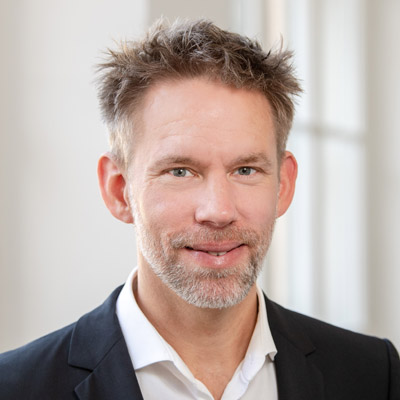
Thorsten Pachur
Technical University of Munich
Abstract
TBA
Short Bio
Thorsten Pachur is Professor of Behavioral Research Methods at the TUM School of Management, Technical University of Munich. How does a mind with limited attention make good decisions in a fundamentally uncertain world? Thorsten approaches this question by measuring where attention goes when people make risky decisions, how attending to information shapes preference, and how affect guides and modulates valuation. This work has shown, for instance, that patterns long interpreted as distorted treatment of information—such as the overweighting of rare events and other patterns in psychoeconomic curves—can arise from biases in attention allocation, and it has helped put attention at the center of theoretical accounts of risky choice. In his research, he draws on a multimethod approach encompassing behavioral experimentation, process tracing, computational modeling, and simulation.
Thorsten is driven by the conviction that a key to progress in the decision sciences lies in theory integration: the commonly neglected question of how existing theories relate to one another and can be connected toward a more comprehensive, cumulative understanding of how the mind makes decisions. His work has appeared in Psychological Review, Psychological Bulletin, Psychological Science, and the Journal of Experimental Psychology: General, and has been supported by the German Research Foundation and the Swiss National Science Foundation. He serves on several editorial boards, has been Associate Editor of Cognitive Psychology since 2025, and was elected Fellow of the Association for Psychological Science in 2017.
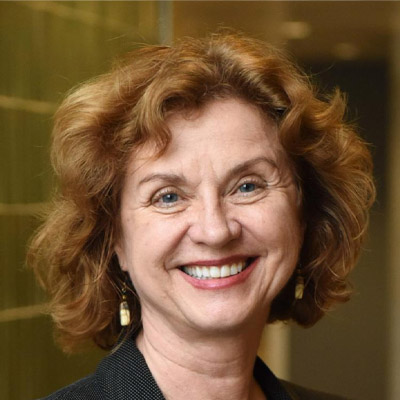
Elke Weber
Princeton University
Abstract
TBA
Short Bio
Elke Weber is a cognitive psychologist and behavioral decision theorist. Her research draws from psychology, economics, sociology, ecology, and evolutionary biology to examine and model the decisions of individuals and groups as they deal with uncertainty and trade-offs in complex threats like climate change. She holds honorary doctorates from the University of Basel and Leuphana University.
Over her career, Weber has contributed her expertise to numerous organizations in the US and beyond. She has served on various National Academy of Sciences advisory committees on the Human Dimensions of Global Change, as a member of the U.S. Environmental Protection Agency’s (EPA) Science Advisory Board, and on a Committee on Carbon Neutrality to the German government. Weber has also been a lead author on the United Nations Intergovernmental Panel on Climate Change (IPCC) Fifth and Sixth Assessment Reports. She is a fellow of the American Academy of Arts and Sciences and a member of both the German National Academy of Sciences Leopoldina and the U.S. National Academy of Sciences.
In 2016, she received the Distinguished Achievement Award from the Society for Risk Analysis; in 2023, the Patrick Suppes Prize from the American Philosophical Society; in 2024, the BBVA Frontiers of Knowledge Award in the Social Sciences; in 2025, the Howard Crosby Warren Medal from the Society for Experimental Psychology for the most significant advances in Experimental Psychology over the prior five years and the INSPIRE Award from the University of Lausanne.
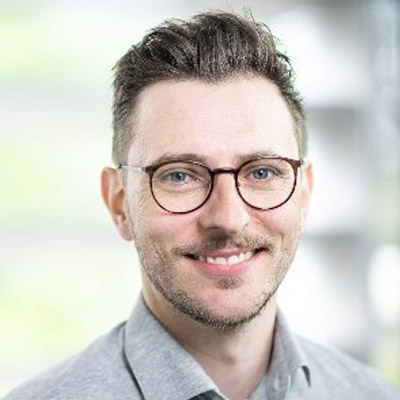
Köbis Nils
University of Duisburd-Essen
Abstract
TBA
Short Bio
Nils Köbis is a behavioral scientist specializing in corruption, (un)ethical behavior, social norms, and artificial intelligence. He is the Professor of Human Understanding of Algorithms and Machines at the University of Duisburg-Essen and a member of the Research Center Trustworthy Data Science and Security at UA Ruhr. Nils Köbis studied psychology at the University of Münster and social psychology at the Vrije Universiteit Amsterdam, where he earned his doctorate in 2018 with a thesis on the social psychology of corruption. From 2016 to 2020, he was a postdoctoral researcher at CREED (Center for Research in Experimental Economics and Political Decision-Making) at the University of Amsterdam. He subsequently worked as a Senior Research Scientist at the Center for Humans and Machines at the Max Planck Institute for Human Development.