
Nicosia
September 2025
Learning Disabilities
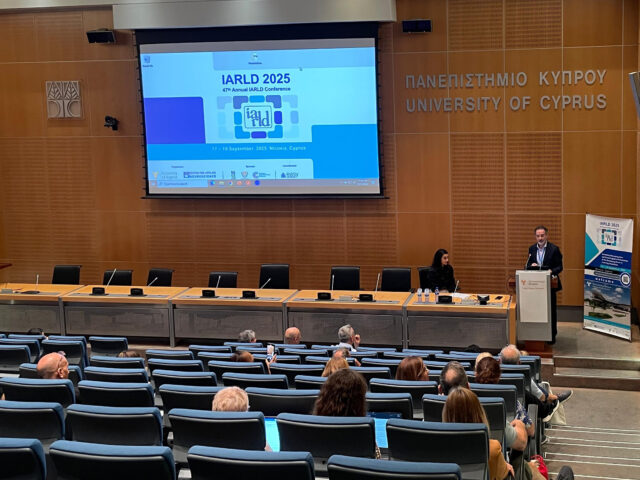
From September 17–19, 2025, the University of Cyprus in Nicosia hosted the 47th Annual Conference of the International Academy for Research in Learning Disabilities (IARLD 2025). The conference, themed “Assessing Neurocognitive and Social-Cognitive Performance of the Developing Brain in Learning Disabilities,” gathered 60 leading academics, researchers, practitioners, and students from 14 countries to advance research and practice in the field.
The conference was organized by Professors Timothy C. Papadopoulos and George Spanoudis alongside two dedicated committees from 15 prestigious institutions. The organizers praised the collaborative spirit of the attendees, stating, “The 47th Annual Conference of the International Academy for Research in Learning Disabilities of IARLD has shown how sharing diverse perspectives on learning disabilities leads to meaningful progress in both theory and practice. We thank all participants for their dedication, engagement, and contributions to advancing the field.”
Program
The conference focused on how neurocognitive abilities such as memory, attention, and problem-solving intersect with social-cognitive skills like communication, emotional regulation, and interaction in the context of learning disabilities. Discussions emphasized early detection, intervention strategies, and how cognitive and social factors jointly shape learning experiences.
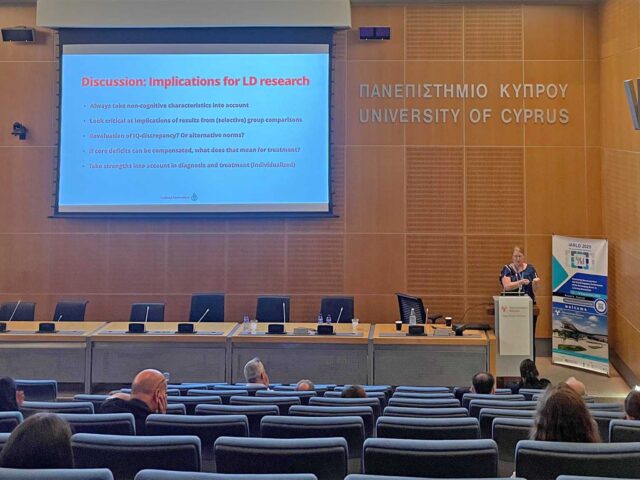
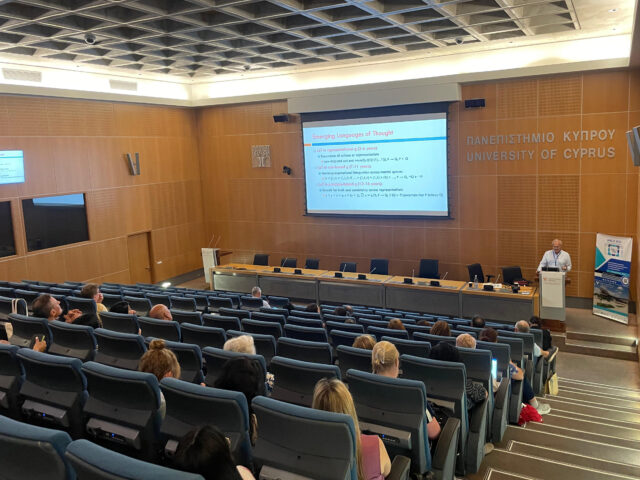
Keynote speakers offered groundbreaking insights. Professor Evelyn H. Kroesbergen (Radboud University) delivered the William Cruickshank Memorial Lecture on the characteristics and educational needs of gifted students with learning disabilities. Professor Andreas Demetriou (University of Cyprus, University of Nicosia) presented The Typical and Atypical Developing Mind: A Common Model, bridging theories of cognitive development with applications to developmental disorders. Professor Mikko Aro (University of Jyväskylä) explored the role of non-cognitive factors in learning.
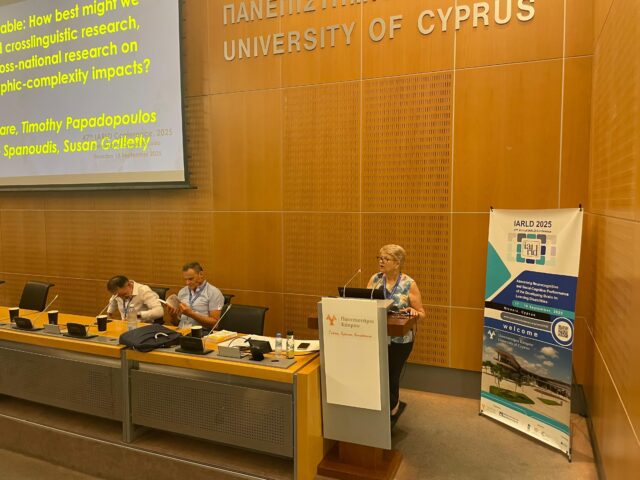
The academic program was full and varied, with symposia, interactive sessions, a poster session, and a roundtable on research in orthographic complexity across languages and countries. Presentations covered many important topics, including reading difficulties, ADHD, and other learning disabilities, autism spectrum disorders, and key cognitive skills like memory, attention, and rapid naming. Speakers also shared new approaches to teaching and interventions that support reading, math, and overall learning. Other sessions examined how motivation, confidence, and social-emotional development impact students’ progress. The mix of research and practice created lively discussions and helped participants connect across different fields of education, psychology, and neuroscience.
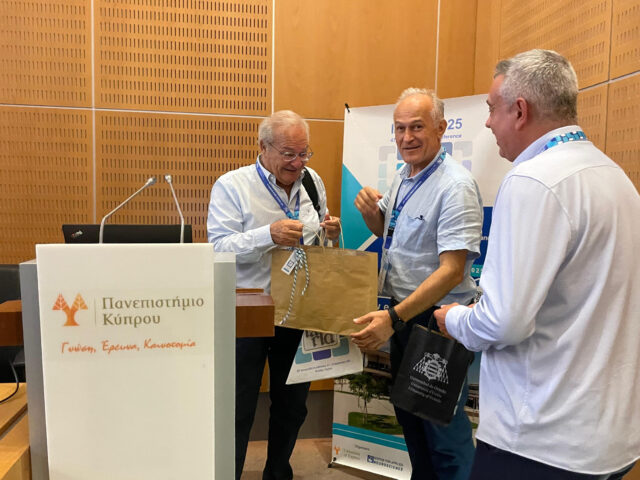
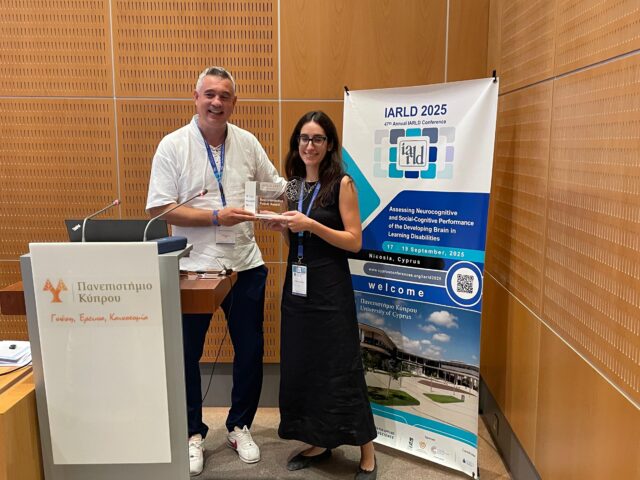
At the closing ceremony, Olga Socratous received the Janette Klingener IARLD Conference Poster Award. The Award honours the late Professor Janette Klingner, who was a Fellow of the Academy and held positions in IARLD.
Beyond the lecture halls, participants enjoyed a lively social program. The welcome reception at the University of Cyprus set the stage for networking. A traditional Cypriot conference dinner at Stoa tou Demetri Restaurant featured authentic meze and local drinks, highlighting the island’s culinary heritage. The post-conference excursion to Lefkara Village immersed attendees in Cypriot culture with visits to the Church of the Holy Cross, lace and silver workshops, and a hands-on “lokumi” (Cyprus delight) making experience.
Looking Ahead
As the success of IARLD 2025 came to a close, participants left with new insights, collaborations, and inspiration to carry forward into their own work. The International Academy for Research in Learning Disabilities is already preparing for its next annual conference, which will take place in New Hampshire, USA. The 48th Annual Conference of the International Academy for Research in Learning Disabilities (IARLD 2026) will continue the tradition of bringing together leading experts, researchers, and practitioners to share the latest advances in the field and foster a global community dedicated to supporting individuals with learning disabilities.
About the Hosts
The International Academy for Research in Learning Disabilities (IARLD) is an international group of top researchers, educators, and doctors who study learning disabilities. Founded in 1976, its goal is to be a professional group where members can share information and advance knowledge in the field. The IARLD has nearly 300 members from 29 different countries and 30 disciplines, including experienced and young researchers, doctors, and doctoral students.
The University of Cyprus (UCY), established in 1989, is a research-oriented institution with approximately 7,000 students, 860 faculty and staff members, 14 research centers (including three Centres of Excellence), and multiple laboratories. It is the only Cypriot university listed in the Academic Ranking of World Universities (#801–900, 2024–2025). UCY is also ranked #401–500 in the Times World University Rankings, #64 in the Emerging Economies University Rankings, and #452 in the QS World University Rankings.
The Center for Applied Neuroscience(CAN) at the University of Cyprus, founded in 2011 and accredited by the Republic of Cyprus, advances applied neuroscience through innovation and collaboration. It focuses on language, cognition, emotion, and behavior across the lifespan, addressing conditions such as learning disabilities, anxiety, brain injury, and dementia. With six specialized laboratories, CAN employs cutting-edge tools including neuroimaging, brain stimulation, virtual reality, and computational methods. It has trained over 100 researchers and provided free evaluations and guidance to thousands of individuals and families in Cyprus, aligning its mission with the UN Sustainable Development Goals on health, equity, and inclusion.
EasyConferences gave strong support to the meeting. With the Conference Registration System (CRS), participants could easily register, book hotels, and sign up for social events. The Submission System helped organizers manage abstracts, reviews, and scheduling. On top of this, EasyConferences provided professional conference management services, making sure all logistics ran smoothly so that everyone could focus on the science and networking.