
Keynote Speakers

Terrie Moffitt
Title: History of an idea 1993-2026: “Adolescence-Limited” and “Life-Course Persistent” Antisocial Behaviour
This talk is about a developmental taxonomy of antisocial behavior, first published 30 years ago, that proposed two primary hypothetical prototypes of young people who engage in antisocial behaviour: life-course persistent versus adolescence-limited (Moffitt, Psychological Review, 1993). According to this idea, life-course persistent offenders’ antisocial behavior begins in childhood and continues persistently thereafter at least into midlife. In contrast, adolescence-limited offenders’ antisocial behavior begins in adolescence and gradually ends when social adulthood is attained. Life-course persistent antisocial individuals are few, persistent, and pathological. Adolescence-limited antisocial individuals are common, relatively transient, and near normative. This distinction means that the majority of young people who come in contact with the criminal justice system are normal, psychologically healthy juveniles, who are highly likely to reform if they are diverted away from criminal processing. This idea attracted the 2018 ‘Juvenile Justice Sin Fronteras (Without Borders)’ International Award for the protection of the rights of children and improving the welfare of young people in conflict with the law around the world. In this talk Dr. Moffitt will describe the history of this research, and most recent findings.
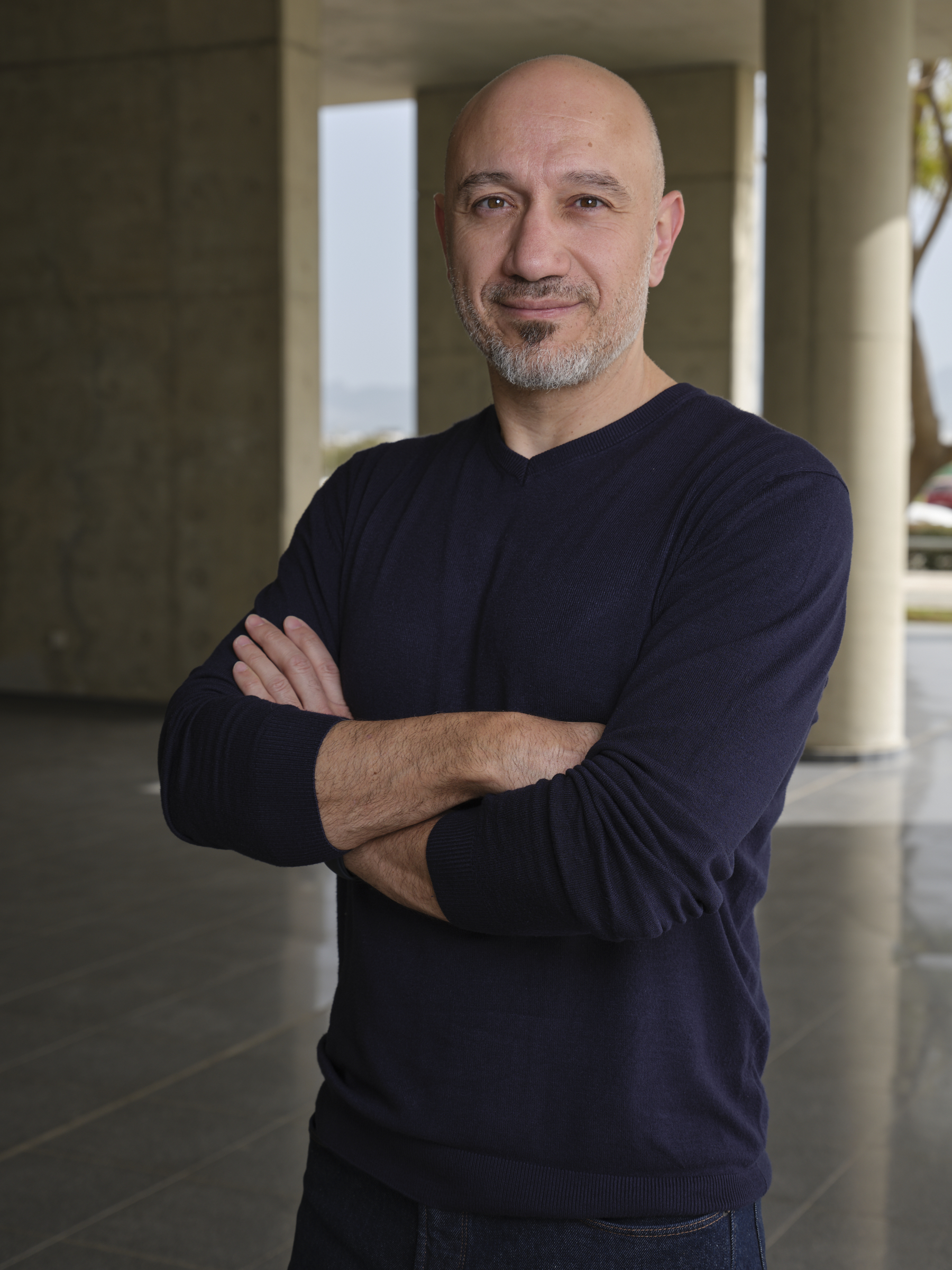
Kostas Fanti
Title: Technology-Supported Interventions Targeting Aggression and Antisocial Behavior
Over the past decade, there has been growing interest in the treatment of aggression and antisocial behavior. However, existing treatments show moderate effectiveness. In our lab, we integrate multiple treatment approaches to develop and evaluate technology-supported interventions aimed at reducing antisocial behaviors and traits. Our findings indicate that computerized attention modification training can increase attentional focus towards positive and emotional stimuli, thereby reducing anger, antisocial behavior, and psychopathic traits. Additionally, our interventions that incorporate mindfulness and executive functioning training within virtual reality environments show promise in enhancing empathy and effectively reducing anger, aggression, and hostility. Further, we found that heart rate variability biofeedback training is associated with improved emotion regulation and reductions in callous-unemotional traits. Finally, our research suggests that non-invasive brain stimulation may enhance emotion recognition, leading to a decrease in symptoms associated with antisocial personality disorder. In this presentation, I will argue that this emerging generation of technology-enhanced, neuroscience-informed treatments holds significant promise and clinical utility for the prevention of antisocial behavior across diverse settings.

Chijs van Nieuwenhuizen
Title: Good men do what bad men dream
In my lecture, I will explore the nature of human destructiveness and the persistent question of what drives individuals to commit severe acts of violence. Central is the provocative idea that “bad men do what good men dream” – inviting reflection on our shared human vulnerabilities. I will elaborate on death drive (Thanathos), original sin, unscrupulous murderers and on ‘average aggression’. Finally, I will share my thoughts whether these concepts have practical value and will emphasize that ideas about responsibility, neuroscience, ethics, and human nature inevitably shape our forensic psychiatric practice.
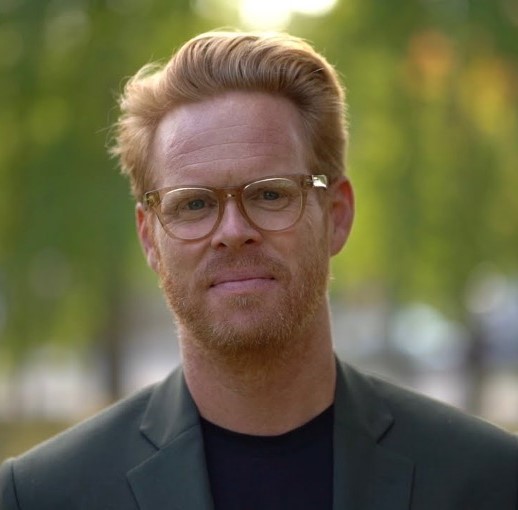

Henrik Andershed & Olivier F. Colins
Title: From Youth Psychopathy to Callous-Unemotional Traits… and Back?
Professors Andershed and Colins have been working together for more than ten years on a common research quest: to test the viability of psychopathy construct in children and adolescents and the usefulness of callous-unemotional traits (or limited prosocial emotions) as a subtyping scheme for antisocial behavior, including conduct disorder. They have done this in the form of more than 40 scientific studies/articles using various samples from different countries, while using a variety of designs, and assessment methods. In this keynote lecture, they will summarize what their studies and the research field more broadly have shown with regard to youth psychopathy, callous-unemotional traits, and the claim that it is sufficient to only use one dimension (i.e., callous-unemotional traits) to identify youth who show a constellation of personality traits, behaviors, and anomalies that have been associated with adult psychopathy. This keynote will also refer to the current debate as to whether multiple specifiers are needed for subtyping conduct disorder, in addition to the “with limited prosocial emotion specifier” that has been incorporated in the DSM-5.
Terrie E. Moffitt’s expertise is in the areas of lifelong aging, mental health, antisocial behaviour, and longitudinal research. She is the associate director of the Dunedin Longitudinal Study, which follows a 1972 birth cohort in New Zealand. She also founded the Environmental Risk Longitudinal Twin Study (E-Risk), which follows a 1994 birth cohort in Britain. Dr. Moffitt is a licensed clinical psychologist.
She is an elected fellow of the US National Academy of Medicine, American Academy of Arts and Sciences, British Academy, UK Academy of Medical Sciences, and Association of Psychological Science. Moffitt is recipient of the Stockholm Criminology Prize, the Klaus J Jacobs Prize, the NARSAD Ruane Prize, and the 2022 Grawemeyer Prize for her work on antisocial behaviour and mental health. Moffitt received her PhD in psychology at the University of Southern California, and completed her postdoctoral training at the UCLA Neuropsychiatric Institute. She holds appointments at Duke University, King’s College London, and the University of Oslo. She enjoys working on her poison-ivy farm in North Carolina. Learn more at www.moffittcaspi.com.
Dr. Kostas Fanti is the director of the Developmental Psychopathology Lab (DPL) and Professor of Developmental Psychology at the University of Cyprus. His research combines sophisticated quantitative methods with innovative experimental, clinical and neurophysiological approaches to treat and explain heterogeneity in antisocial behavior, bullying and victimization among children and adolescents. He is the principal investigator on multiple grants aiming to understand adolescent development, and he published extensively in clinical, neuropsychological, social, biological, methodological and developmental journals. He received multiple awards for his research, such as the Jevon S. Newman Career Contribution Award from the Society for the Scientific Study of Psychopathy and the University of Cyprus Excellence in Research Award. His current program of research focuses on the application of neuro-biological, virtual reality, school, and multi-systemic interventions for adolescents at risk for behavioral problems.
Cyril Boonmann is an Assistant Professor and psychotherapist at the Department of Child and Adolescent Psychiatry, LUMC Curium. He also works as an independent senior researcher at the Department of Forensic Child and Adolescent Psychiatry of the Universitären Psychiatrischen Kliniken (UPK) Basel and at the Department of Psychology of the University of Basel in Switzerland. In addition, he serves on the board of the European Association for Forensic Child and Adolescent Psychiatry, Psychology and other involved Professions (EFCAP).
He studied educational and developmental psychology at Leiden University and obtained his PhD at the VU University Medical Center (VUmc) on mental health problems and juvenile sexual offending behavior. After completing his PhD, he moved to Switzerland, where he established the research unit within the forensic child and adolescent psychiatry department at UPK Basel and worked clinically on the closed ward. Alongside his forensic work, he conducted research and provided clinical care in general child and adolescent psychiatry, particularly within residential youth care. During this period, he also completed his psychotherapy training.
Since 2022, he has been based at LUMC Curium, while continuing to supervise several research projects at UPK Basel. Since 2025, he has been a member of the forensic section of the Dutch Institute of Psychologists (NIP).
With experience across countries and healthcare systems, and across scientific, clinical, educational, and policy domains within both general and forensic psychiatry and psychology, he aims to build bridges between these fields. His goal is to foster mutual learning, improve care for young people and adults (and their families) with complex and multiple problems, including forensic issues, and to strengthen the support available to professionals in the field.
Chijs van Nieuwenhuizen, clinical psychologist/psychotherapist, is professor Transforming Care for Youth ((Tilburg University, GGzE) and visiting professor University College Ghent, Faculty of Education, Health & Social Work. She works as a clinician at Forte GGZ and LMcare. At Forte GGZ, she is also head Academic development, research and innovation.
Van Nieuwenhuizen is, among other things, president of EFCAP, member of the Scientific Advisory Committee of the Child Care and Protection Board, chair/member of the ZonMw committees ‘Suicide prevention’, ‘Research programme Mental Health Care’, ‘Connection between adult mental health care and youth care’, ‘Neuropsychoanalysis Fund’ and member of the NWO committee ‘Reintegration in society of adolescents and adults with autism and psychosis’.
Henrik Andershed is adjunct professor of Criminology at Örebro University in Sweden. His research is primarily about CU traits, psychopathy and risk and protective factors for crime and psychosocial problems. He is the founder of the Swedish longitudinal research program SOFIA, the developer of multiple assessment tools, and has received several awards for his research. He is the author of more than 150 scientific articles and books.
Olivier F. Colins is associate professor of Forensic Special Needs Education at Ghent University in Belgium. His current research focuses on the etiology, development, and consequences of severe conduct problems, criminality, and deviant personality traits. He is the principal investigator of several research projects with criminal justice-involved boys and girls and the author of more than 120 scientific articles and books.
Nicholas D. Thomson, PhD, is Director of Research for the VCU Health Medical Center’s Injury and Violence Prevention Core and Professor of Psychology and Psychiatry at Virginia Commonwealth University. His work focuses on the developmental mechanisms underlying violence and externalizing disorders. He integrates developmental science, psychophysiology, and immersive technology to design and evaluate scalable interventions for youth and adults at risk for violence. Dr. Thomson has authored more than 100 peer-reviewed publications and book chapters, including The Handbook of Gun Violence (Elsevier), and has secured over $22 million in federal research funding from the CDC and NIH. He currently leads multi-site, federally funded trials examining prevention, intervention, and recovery strategies across the continuum of youth violence. He is the Founder and Chief Executive Officer of Arche XR, a science-driven technology company translating evidence-based mental health and violence prevention programs into immersive, scalable platforms for schools, health systems, juvenile justice settings, and community partners nationwide. His work bridges rigorous developmental science with real-world implementation to strengthen systems, reduce violence, and build resilience among youth.