Beyond the Prompt: The Rise of Autonomous AI Agents
Bridging Research, Enterprise, and Autonomous Systems
Date & Time
Thursday, October 22, 2026, 14:00–15:30
Abstract
Artificial Intelligence is undergoing a fundamental paradigm shift—moving from passive conversational models and conversational assistants to active, autonomous Agentic AI systems capable of perception, planning, tool usage, and end-to-end task execution. Today, autonomous agents are being actively deployed across software development, data science, scientific research, and complex enterprise workflows. However, transitioning AI agents from controlled demos to robust, safe, and collaborative real-world applications presents significant challenges. This panel convenes experts across industry and academia to explore the state-of-the-art in Agentic AI architectures. We will examine critical topics including:
- Real-World Impact: Where active deployments of agentic systems are delivering genuine ROI
and transformative outcomes in industry and research. - Architectural & System Reliability: Addressing key engineering bottlenecks such as complex
multi-step reasoning, context limitations, tooling integration, and autonomous verification. - Evaluation & Trust: Bridging academic benchmarks with industry reliability standards to mitigate risks like divergence, hallucination, and operational vulnerability.
- The Future of Human-Agent Interaction: Designing effective paradigms for collaborative oversight (”human-in-the-loop” vs. ”human-on-the-loop”) as agentic ecosystems mature.
By contrasting commercial engineering constraints with cutting-edge academic AI research, this session will provide technical leaders, researchers, and practitioners with an actionable roadmap for developing and deploying the next generation of AI agents.
Panelists
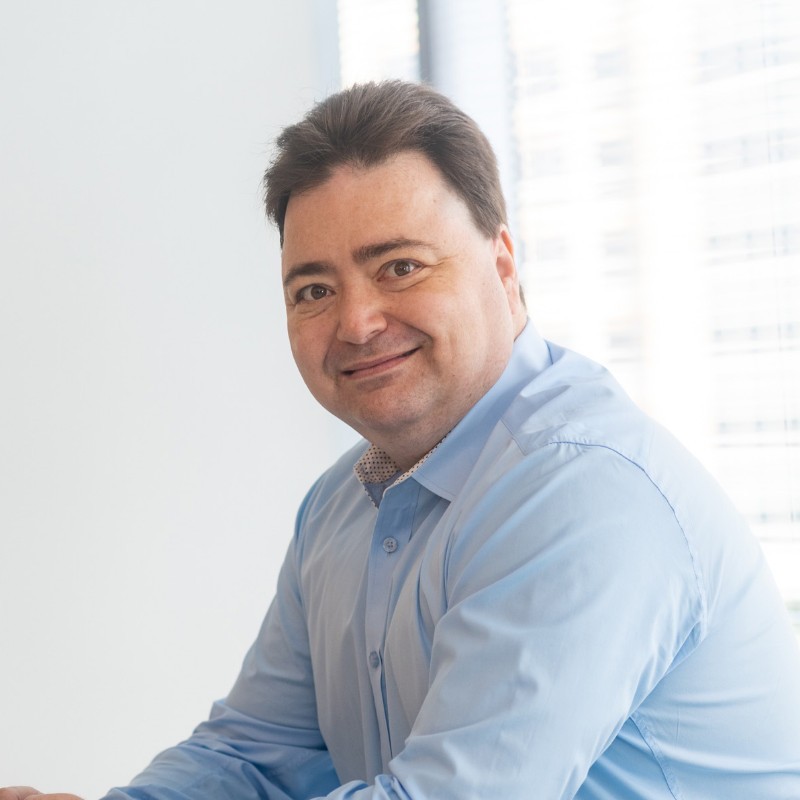
Dr. Angelos Stavrou
Dr. Angelos Stavrou is the CEO of A2 Labs and a professor in the Bradley Department of Electrical & Computer Engineering at Virginia Tech and the founder of Quokka Inc. and A2 Labs. Dr. Stavrou is a serial entrepreneur and the founder of Quokka, A2 Labs, Aether Argus, WayWave, Impedyme, and Weavian Inc. Quokka is a VC-backed mobile security company with a valuation of more than $ 100 M. Dr. Stavrou has also served as a principal investigator on research awards from NSF, DARPA, IARPA, DHS, AFOSR, ARO, ARL, and ONR. He has written more than 160 peer-reviewed conference and journal articles. Stavrou received his M.Sc. in Electrical Engineering, M.Phil., and Ph.D. (with distinction) in Computer Science, all from Columbia University. Stavros is an Associate Editor of IEEE Transactions on Computers, IEEE Security & Privacy, and IEEE Internet Computing magazine, and part of the governing board of the IEEE Blockchain initiative. He is a senior member of the ACM, USENIX, and IEEE. In 2013, he received the IEEE Reliability Society Engineer of the Year award. His team was awarded the DHS Cyber Security Division’s ”Significant Government Impact Award” in 2017 and the “Bang for the Buck Award” in 2019. He received the IEEE Reliability Society Lifetime Award in 2024.
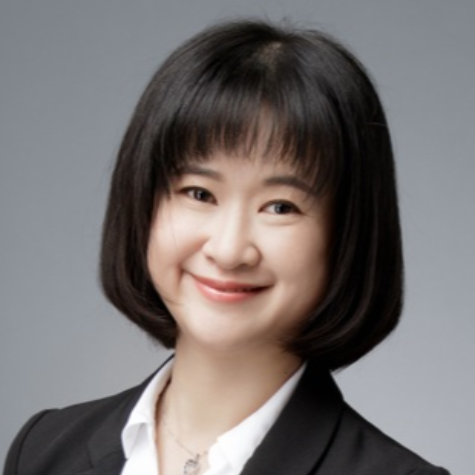
Dr. Janet Lin
Dr. Janet Lin is a Professor at the Norwegian University of Science and Technology (NTNU), Norway, specializing in reliability engineering, prognostics and health management (PHM), and trustworthy AI for safety-critical systems. She currently serves as Vice President for Publications of the IEEE Reliability Society and has held several leadership and editorial roles within the reliability engineering community. Her research focuses on reliability and asset management, AI-enabled maintenance and decision support, and the reliability and safety of generative and agentic AI systems, with applications across energy, transportation, manufacturing, and other critical infrastructures. She is also an editor and author of the recent Springer book Generative and Agentic AI Reliability: Architectures, Challenges, and Trust for Autonomous Systems.
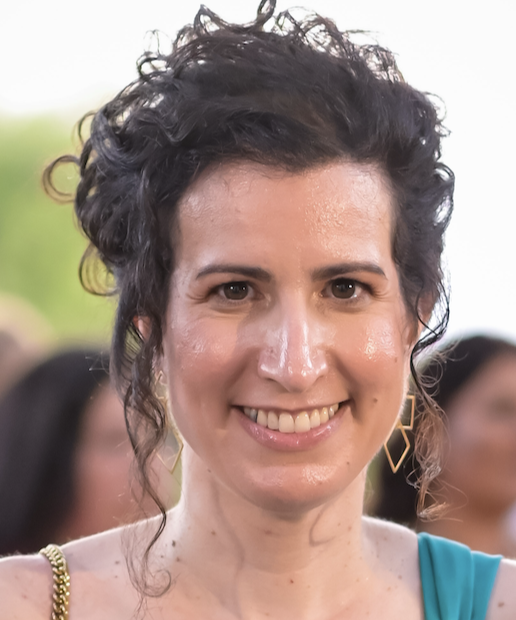
Dr. Fenareti Lampathaki
Dr. Fenareti Lampathaki is the Technical Director and a Co-Founder of Suite5 Data Intelligence Solutions, holding a PhD and an MEng in Electrical and Computer Engineering, both from the National Technical University of Athens. She brings over 15 years of experience bridging research and enterprise while steering large-scale research and innovation projects and commercial services. Her technical expertise spans explainable AI/ML platforms, data spaces, and reliable data management. She currently serves as the Technical Coordinator of the Horizon Europe ACCOMPLISH project, bringing automated compliance-by-design to data and autonomous AI operations. Previously, she successfully led major European data-driven projects including SYNERGIES, XMANAI, SYNERGY and ICARUS, driving the secure adoption of enterprise AI.
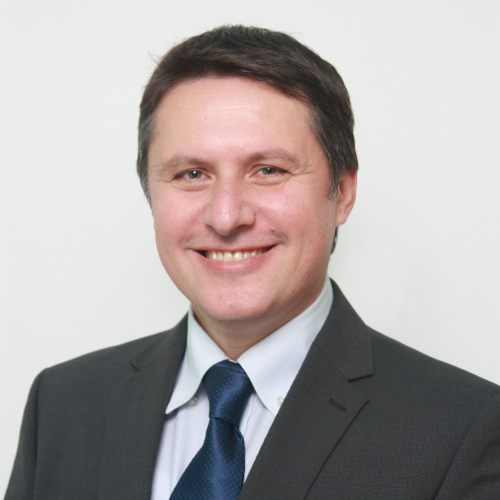
Dr. Michael Sirivianos
Dr. Michael Sirivianos is an Associate Professor of Computer Science and Engineering. He is the Dean of the School of Engineering and Technology at the Cyprus University of Technology, and he serves on the Board of the CYENS Centre of Excellence. He is also the scientific coordinator of the Fact-check Cyprus Centre against Disinformation. He researches ways to help social media users tell truth from lies. He received his PhD from Duke University in 2010. His research interests include trust-aware design of distributed systems, device-centric authentication, federated identity management, discrimination based on personal data, cybersafety (disinformation and protection of minors), transactional workload scalability, and measurement of blockchain systems. He has published articles in some of the most influential conferences and journals of Networked Systems and Social Computing, including ACM SIGCOMM, USENIX NSDI, ACM IMC, USENIX ATC, AAAI ICWSM, ACM CSCW, IEEE INFOCOM, IEEE ICDCS, IEEE/ACM Transactions on Networking, and ACM Transactions on the Web. He has extensive experience leading EU-funded projects and has secured over C3.5M in research funding for the Cyprus University of Technology. His team’s work on fringe web communities, hate speech, disinformation and disturbing content on YouTube has received extensive coverage in major news outlets, including The New York Times, The Washington Post, The Atlantic, New Scientist, Business Insider, Quartz, Wired, El Paìs, and PolitiFact.
Moderator

Dr. Preeti Chauhan
Dr. Preeti Chauhan is a Technical Program Manager at Google Cloud Applied AI, leading 0→1 commercial launches for enterprise Generative AI platforms, autonomous multi-agent architectures, and horizontal runtime convergence across core foundational pillars. Bridging frontier AI research with hyperscale cloud production, she directs cross-organizational initiatives delivering ultra-low-latency streaming voice inference (¡600ms TTFT), real-time supervisor guardrails, and enterprise reinforcement learning (RL) dataset pipelines directly powering breakthroughs in frontier foundation models. Prior to Applied AI, Dr. Chauhan directed strategic AI accelerator reliability and data center infrastructure programs across Google’s global fleets. She pioneered transformative hardware standards, including the GPU-as-a-Field-Replaceable-Unit (GaaF) paradigm ($1B+ projected lifecycle savings) and dynamic Weibull failure modeling eliminating $1.28B in fleet OpEx, and led crisis turnarounds recovering $54M in vendor defect liability. Earlier in her career at Intel Corporation, she was the Technical Program Manager for pioneering 3D stacked-die packaging (Foveros) on commercial SOCs—earning the Intel Achievement Award, Intel’s highest corporate honor—as well as enterprise server processor reliability. Dr. Chauhan is a 4-time recipient of the Google Cloud Tech Impact Award across AI platforms and hardware infrastructure. An active technical leader across the international engineering community, she serves on the Board of Directors for the IEEE International Reliability Physics Symposium (IRPS) and as Vice President of Meetings and Conferences for the IEEE Reliability Society. She co-edits the data column for IEEE Computer magazine, authored the Springer textbook “Copper Wire Bonding for Semiconductor Electronics”, and holds a Ph.D. in Mechanical Engineering from the University of Maryland, College Park.