
KEYNOTE SPEAKERS
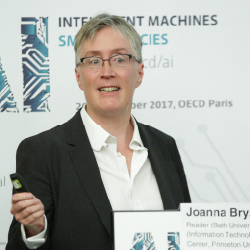
Joanna Bryson
EurAI Keynote Speaker
Professor of Ethics and Technology
Hertie School, Berlin
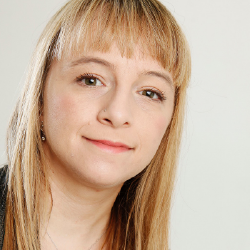
Sabine Hauert
University of Bristol
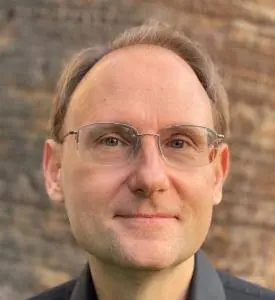
Sven Koenig
Chancellor’s Professor and Bren Chair at the University
of California, Irvine
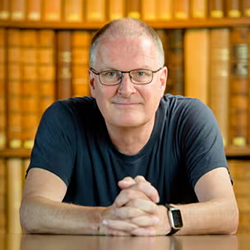
Michael Wooldridge
University of Oxford
Joanna Bryson
EurAI Keynote Speaker
Professor of Ethics and Technology
Hertie School, Berlin
EurAI Keynote Talk Title
The Limits of Artificial Agency
Abstract
Decades ago, Pattie Maes (perhaps among others1) first argued for the use the word ‘agent’ to describe both animals and ‘animats’
— that is, to easily express the unified concerns of artificial and natural intelligence. Now those of us with experience in building agentic systems seem only able to gape in horror as ordinary users blithely give password and credit card control to systems no one has validated.
What are the limits of the agency we can attribute to AI? Are humans really no more than ‘stochastic parrots’, and do AI systems even rise to that level? What does it mean to be collaborator? What does it take to establish trust? How do we stop people from being stupid or evil about AI?
In this talk, I lay out the ontology for understanding what qual- ifies for not only agency, but legal and moral agency. I describe how trust is built in a community, and collaboration built between partners. I also touch on the massive legislative effort the European Union has made to ensure that AI is deployed in ways that do not destabilise our world.
I do this all in about thirty minutes, so we can have plenty of time for the discussion and debate that builds our society, and gives us collective agency.
Short Bio
Joanna J Bryson has been Professor of Ethics and Technology at Hertie School, Berlin since February 2020. She is globally recognised for expertise in intelligence broadly, including AI policy and impacts. Her original academic focus was behavioural ecology, using AI for scientific simulations of intelligence. During her PhD on systems engineering of AI, she observed the confusion generated by anthropomorphised AI, leading to her first ethics publication “Just Another Artifact” in 1998. In 2010 her work in AI ethics was first recognised by a policy body when she was invited to participate in the UK research councils’ Robot Ethics retreat, where she coauthored the UK’s (EPSRC/AHRC) “Principles of Robotics,” the world’s first national-level AI ethics soft policy. Her present research focus is the impact of intelligent technology on economies, security, and human cooperation. She also studies transparency for and through AI systems, technological impacts on power, interference in democratic regulation, the future of labour, redistribution, and digital governance more broadly. She consults frequently on policy and science including to government entities in Germany, the UK, the EU (EP/EC), US, Singapore, Switzerland, and Canada; transnational organisations including Unesco, the UN, OSCE, OECD, CoE, EuroMed; NGOs such as the Red Cross, Chatham House, IEEE, WEF. In 2020, Germany nominated her to the Global Partnership of AI, where she chaired an AI Governance committee.
Sabine Hauert
Professor of Swarm Engineering
University of Bristol
Talk Title
Designing Trustworthy Robot Swarms for Real-World Applications
Abstract
Building on two decades of progress, swarm robotics is approaching the point where it can deliver out-of-the-box solutions for real-world environments that are adaptive, scalable, and robust.
Realising this potential requires moving beyond the traditional view of swarms as large collectives of simple, autonomous, and homogeneous agents that rely solely on local sensing and interactions.
Instead, we argue for a new paradigm in which swarms leverage advances in AI, integrate richer local perception, and exchange information not only locally but also through global or quasi-global communication.
In this vision, swarms of specialised robots operate with shared situational awareness, enabling them to coexist and coordinate seamlessly across a wide range of applications, including medicine, construction, agriculture, logistics, and environmental protection.
Underpinning this vision is the need to co-design swarm systems with communities and stakeholders, ensuring they are ethical, trustworthy, and safe. This includes developing systematic approaches to engineer emergent behaviours that are transparent and amenable to human design, monitoring, control, and validation.
The long-term goal is to foster an ecosystem in which next-generation robots collaborate with one another – and with humans – at scale.
Short Bio
Sabine Hauert is Professor of Swarm Engineering at University of Bristol. She leads a team of 20 researchers working on making swarms for people, and across scales, from nanorobots for cancer treatment, to larger robots for environmental monitoring, or logistics (https://hauertlab.com). Before joining the University of Bristol, Sabine engineered swarms of nanoparticles for cancer treatment at MIT, and deployed swarms of flying robots at EPFL. She’s PI or Co-I on more than 40M GBP in grant funding and has served on national and international committees, including the UK Robotics Growth Partnership, the Royal Society Working Group on Machine Learning, and several IEEE RAS boards. She is on the board of directors of the Open Source Robotics Foundation and is Executive Trustee of non-profits robohub.org and aihub.org, which connect the robotics and AI communities to the public. In 2026, she was awarded an Honorary OBE for services to robotics.
Sven Koenig
Chancellor’s Professor and Bren Chair at the University
of California, Irvine
Talk Title
Planning for Teams of Agents
Abstract
Agents often need to work cooperatively within a team. For example, teams of robots might have to cover terrain once or repeatedly, build structures, fetch goods in warehouses, or take rock samples on Mars. In this talk, I will discuss centralized and decentralized methods for coordinating robots with different communication abilities, including stigmergy-based, auction-based, and planning-based approaches, all inspired by insights from heuristic search. I will also discuss their applications to train scheduling, manufacturing, mining, networking, intersection control, and other areas.
Short Bio
Sven Koenig is Chancellor’s Professor and Bren Chair at the University of California, Irvine. He is also a fellow of AAAI, ACM, IEEE, and AAAS. Additional information can be found on his webpage: idm-lab.org.
Michael Wooldridge
Ashall Professor of the Foundations of Artificial Intelligence
University of Oxford
Talk Title
Rethinking Multi-agent Systems in the Era of LLMs
Abstract
The original metaphor for the field of multi-agent systems was that of a team of experts, each with distinct expertise, cooperating to solve a problem that was beyond the capabilities of any individual expert. “Cooperative distributed problem solving”, as it was originally called, eventually broadened to consider all issues that arise when multiple AI systems interact. The emergence and dramatic success of Large Language Models (LLMs) has given new life to our old dream, and “agentic AI” is currently one of the most hyped areas in the most hyped technology of the century to date. A raft of LLM-powered agent frameworks have become available, and standards for LLM-agents such as MCP and A2A are rapidly gaining traction. A range of promising applications of multi-agent LLMs have been reported, such as DeepMind’s co-Scientist, where a complex problem solving system is structured in exactly the way that was envisaged decades ago. So, what lessons can we take from the three decades of research into multi-agent systems in the new era of LLM agents? In this talk, we’ll survey the main approaches, opportunities, and challenges for multi-agent systems in new world of LLM-based AI.
Short Bio
Michael Wooldridge is the Ashall Professor of the Foundations of Artificial Intelligence at the University of Oxford. He has been an AI researcher for more than 30 years, and has published more than 450 scientific articles on the subject, including nine books, translated into eight languages. He is a Fellow of the Royal Academy of Engineering, the Association for Computing Machinery (ACM), the Association for the Advancement of AI (AAAI), and the European Association for AI (EurAI), and is a member of Academia Europaea. He is President Elect of the Association for Advancement of AI (AAAI); from 2014-16, he was President of the European Association for AI, and from 2015-17 he was President of the International Joint Conference on AI (IJCAI); he is currently co-editor in chief of Artificial Intelligence journal. He has received the Faraday Prize from the Royal Society (2025), the Lovelace Medal from the British Computer Society (2020), the Patrick Henry Winston Outstanding Educator Award from the Association for Advancement of AI (2021), the Autonomous Agents Research Award from ACM (2006), and the Distinguished Service Award from the European Association for AI (2023). In 2023 he was appointed specialist advisor to the House of Lords inquiry on Large Language Models. He has published two popular science introductions to AI: the Ladybird Expert Guide to AI (2018), and The Road to Conscious Machines (2020). He presented the 2023 Royal Institution Christmas Lectures, broadcast by BBC TV over December 2023, in the 198th year of the series.