

Ammochostos, Cyprus
May 2026
Maritime
The international conference “Riding the Wave: Advancing the EU Ocean Pact through Science, Innovation and Cooperation” successfully took place in Ammochostos, Cyprus, on 11 and 12 May 2026, bringing together representatives from European institutions, Member States, research organisations, industry, innovation platforms and investment actors to discuss the future of ocean science, maritime innovation and sustainable blue growth in Europe.
Organised as an official event of the Cyprus Presidency of the Council of the European Union, the conference focused on strengthening the connection between ocean science, policy development, innovation deployment and investment opportunities. The event was endorsed by the Ocean Decade Actions as part of the United Nations Decade of Ocean Science for Sustainable Development.
The conference was organised by the Deputy Ministry of Research, Innovation and Digital Policy of the Republic of Cyprus, the Cyprus Marine and Maritime Institute (CMMI), and the ERATOSTHENES Centre of Excellence.
The event took place across two venues in the Ammochostos district. Day 1 was hosted at the Adams Beach Hotel in Ayia Napa and focused on Ocean Science to Policy dialogue and cooperation. Day 2 was held at the Ayia Napa Marina Event Centre and Event Plaza and focused on transforming European blue innovation and ocean research into market-ready solutions and investment opportunities.
Day 1: Ocean Science to Policy
The first day focused on strengthening the science-policy interface and contributing to discussions on the evolving European Ocean Strategy and the Ocean Act framework.
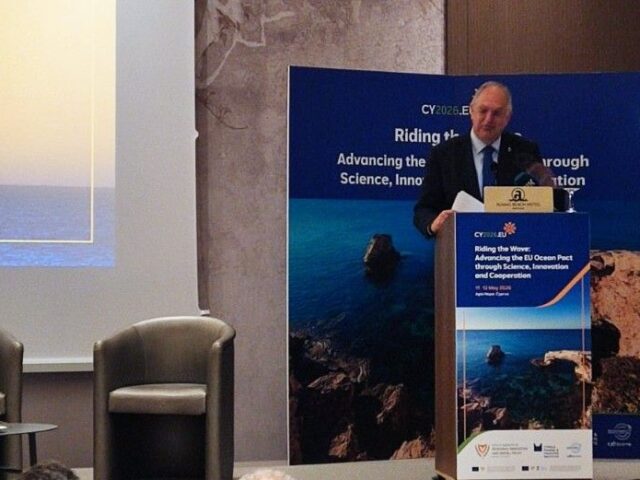
The conference opened with Institutional Welcome Addresses delivered by Dr. Nicodemos Damianou, Dr. Theodoulos Mesimeris, Mr. Zacharias Siokouros, and Prof. Diofantos G. Hadjimitsis, and followed by the Opening speech from Dr. Costas Kadis, European Commissioner for Fisheries and Oceans.
Dr. Kadis emphasized the need “to protect our ocean, we must first understand it. Through the EU Ocean Pact and initiatives such as OceanEye – Europe’s ocean observation initiative – we are strengthening the science knowledge and innovation needed to support informed action for our ocean future.”
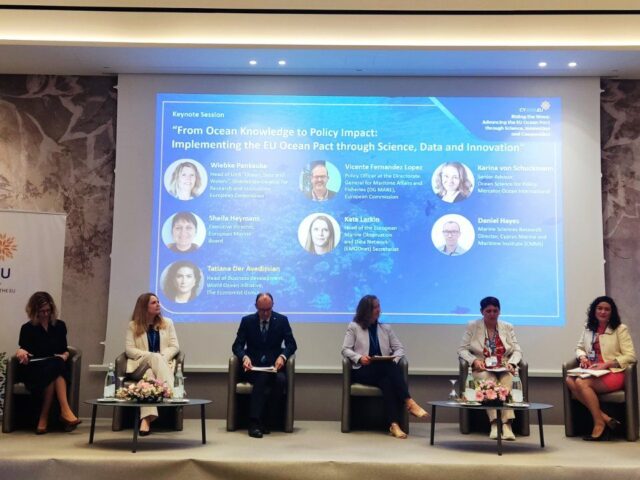
The keynote session “From Ocean Knowledge to Policy Impact: Implementing the EU Ocean Pact through Science, Data and Innovation” featured Ms. Wiebke Pankauke, Dr. Vicente Fernandez Lopez, Dr. Karina von Schuckmann, Prof. Sheila Heymans, Prof. Kate Larkin and Dr. Daniel Hayes. Discussions focused on how ocean science, observation systems and digital tools can support the implementation of the European Ocean Pact and improve evidence-based policymaking. The session also highlighted the role of initiatives such as EMODnet, Mercator Ocean, and European research networks in turning marine knowledge into operational services and policy guidance.
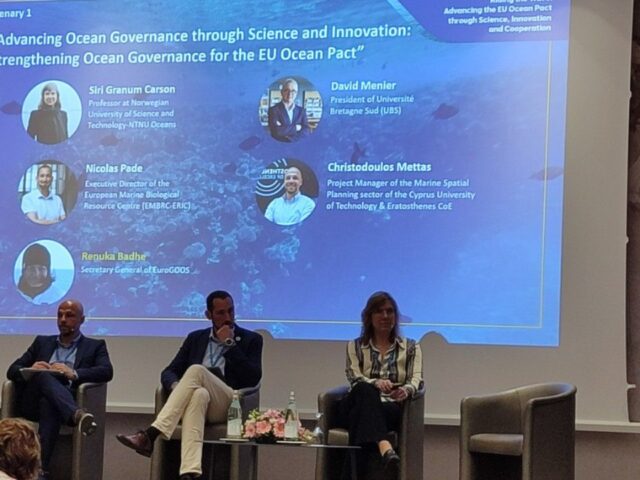
The first plenary session, “Advancing Ocean Governance through Science and Innovation: Strengthening Ocean Governance for the EU Ocean Pact” featured Prof. Siri Granum Carson, Prof. David Menier, Dr. Nicolas Pade, and Dr. Christodoulos Mettas, moderated by Dr. Renuka Badhe. Discussions focused on how marine science, research infrastructures, and interdisciplinary cooperation can support stronger ocean governance and evidence-based policymaking across Europe. The session also explored the role of Marine Spatial Planning and stakeholder engagement in supporting sustainable and balanced ocean management.
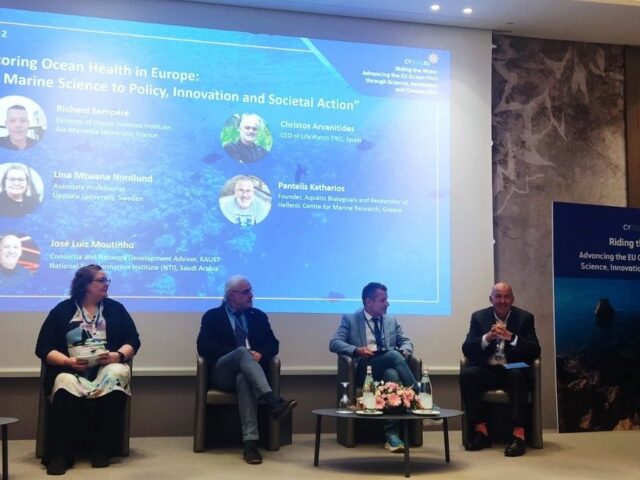
The second plenary session, “Restoring Ocean Health in Europe: From Marine Science to Policy, Innovation and Societal Action,” featured Prof. Richard Sempéré, Dr. Christos Arvanitides, Prof. Lina Mtwana Nordlund, and Dr. Pantelis Katharios, moderated by Mr. José Luiz Moutinho. Discussions focused on ecosystem restoration, marine biodiversity, sustainable aquaculture, and approaches to reducing marine pollution. The session also explored how cooperation between research, innovation, and policy actors can support effective restoration efforts and strengthen ocean awareness across society.
Three parallel workshops were also organised during the conference. “Blue Carbon and Climate Neutrality: Nature-Based Solutions and Ocean Accounting for Europe’s Climate Goals” explored the role of marine ecosystems and blue carbon approaches in supporting Europe’s climate objectives. “Decarbonising Maritime Transport in Europe: Innovation, Regulation and Market Incentives for a Net Zero Shipping Sector” focused on sustainable shipping solutions, regulatory developments and market-driven approaches for reducing emissions in the maritime sector. “The Mediterranean at a Crossroads: Science, Heritage and Regional Cooperation for a Sustainable Sea Basin” examined the importance of scientific cooperation, cultural heritage, and regional collaboration in addressing environmental challenges across the Mediterranean.
The “Blue Horizons” Gala Dinner brought together representatives from EU institutions, research organisations, centres of excellence, and industry for an evening focused on networking and exchange between the science, innovation, and policy communities. The evening included a keynote address by Prof. Philippos Patsalis, who highlighted the importance of research and technological excellence in supporting ocean sustainability and blue innovation. Participants also attended an artistic interlude by the Larnaca Music School “Mikis Theodorakis”, themed “The Ocean: an immensity to discover and protect”, featuring traditional Cypriot songs.
Day 2: From Ocean R&D to Market
The second day of the conference focused on the Blue Investment Challenge and examined how European ocean and maritime research can be transformed into deployable and scalable market solutions. From the early hours, the exhibition and demonstration areas were already buzzing with activity, as participants explored cutting-edge technologies, engaged directly with innovators, and discovered solutions addressing key challenges in the blue economy.
The programme opened with a welcome address by Dr. Demetris Skourides, who highlighted that “Europe must not only be a continent of research excellence. Europe must become the fastest continent in transforming innovation into impact”.
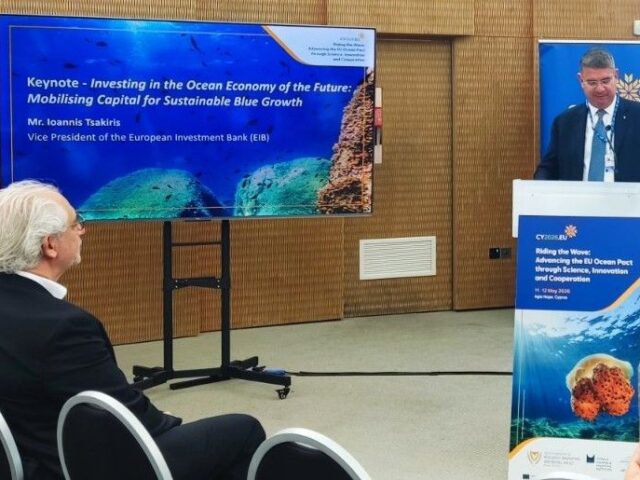
The keynote session “Investing in the Ocean Economy of the Future: Mobilising Capital for Sustainable Blue Growth” was delivered by Mr. Ioannis Tsakiris and focused on the role of public and private investment in supporting Europe’s blue economy. Discussions explored investment trends, development finance, and the importance of aligning financial flows with ocean sustainability goals. The session also highlighted how targeted investment can support innovation, strengthen competitiveness, and accelerate the transition toward a climate-neutral and resilient ocean economy. The keynote was followed by a fireside chat with Mr. Spyros Kouvelis.
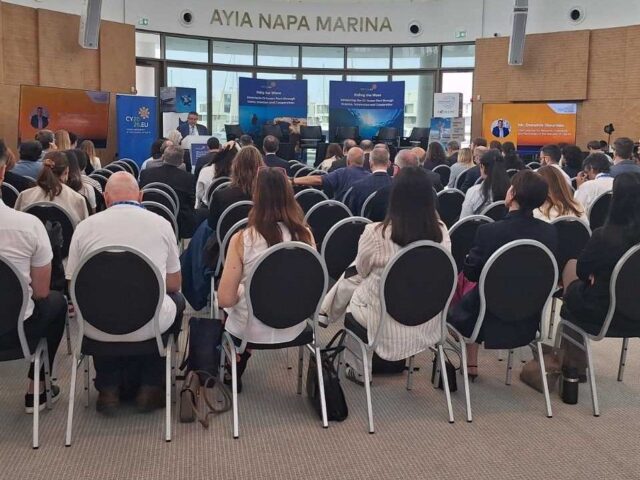
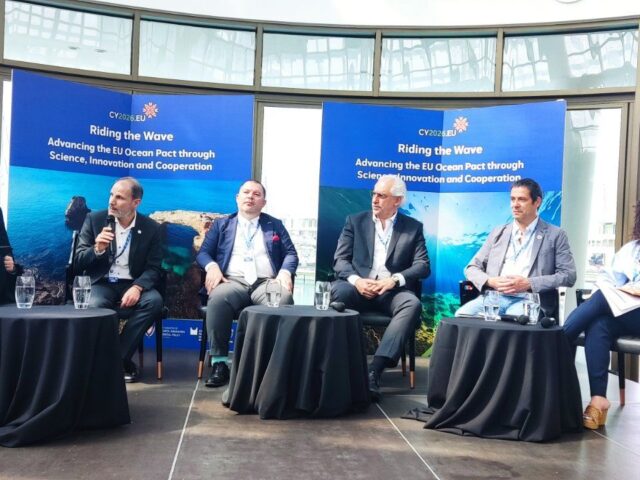
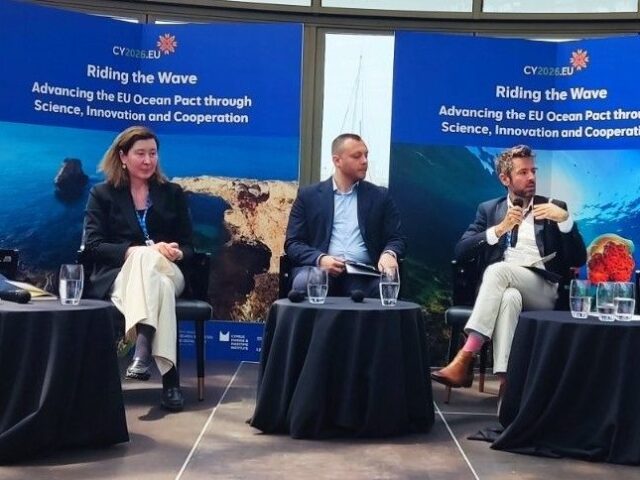
The first panel discussion, “Strengthening Europe’s Blue Innovation Ecosystem: Partnerships, Finance and Mission Driven Opportunities,” featured Mr. Frank Schweikert, Mr. Spyros Kouvelis, Prof. Ruben Maciel Correia Ribeiro Eiras, and Prof. Yannis Ieropoulos, moderated by Ms. Tatiana Der Avedissian. Discussions focused on how public institutions, mission initiatives, philanthropic organisations, and industry networks can work together to support blue innovation and sustainable economic growth. The panel also explored investment gaps, funding opportunities, and the importance of partnerships in helping innovative ocean solutions move from research to real-world application.
The second panel discussion, “Financing the Blue Transition: Unlocking and Scaling Investment for Ocean Start-ups and Sustainable Maritime Innovation,” featured Mr. Darko Manakovski, Mr. Nil Angli, Mr. Stavros Stavrou, and Dr. Dilya Bakhtieva, moderated by Ms. Christina Deligianni. Discussions focused on how venture capital, EU financial instruments, and blended finance mechanisms can support the growth of ocean start-ups and sustainable maritime technologies. The panel also explored investment challenges, regulatory frameworks, and the importance of stronger connections between innovators, investors, and market opportunities.
The session “From Research to Market: Innovation Success Stories of European Ocean Technologies” featured Prof. Paolo Favali, Dr. Konstantina Bereta, Dr. João Rito, Dr. Rana Abu Alhaija, Mr. Zacharias Siokouros, Dr. Kyriacos Themistocleous and Dr. Michalis Mavrovouniotis, moderated by Ms. Raluca Ioana Man. Speakers presented examples of European ocean technologies that progressed from research and development to operational and commercial applications. Discussions highlighted the role of research infrastructures, cross-sector collaboration, and industry partnerships in supporting innovation and market deployment within the blue economy.
The workshop “Verimpact Next Generation Sustainability Intelligence Platform for the Blue Economy” presented AI-enabled tools designed to support sustainability assessment and reporting across marine and coastal sectors. Discussions focused on how scientific, environmental and compliance data can be translated into practical insights for investment decisions, non-financial risk management, and regulatory alignment. The session also explored the role of digital platforms in supporting sustainable growth within the blue economy.
The session “Blue Tech Demonstrations: Showcasing Next Generation Ocean Technologies in Action” offered live demonstrations of innovative ocean technologies both onshore and at sea. Participants experienced solutions related to clean maritime transport, marine observation, sustainable aquaculture, and digital ocean services, including electric vessels, marine robotics, drones, and smart sensors. The session highlighted the practical applications and market potential of emerging technologies while encouraging interaction between developers, investors, policymakers and end users.
Acknowledgements
Mrs. Gotelenne Piaton and Mrs. Kathy Christophorou, with their organizing team and the entire organizing committee, ensured a very rich and balanced programme with high-level speakers, innovators, policy makers, and investors. EasyConferences supported the event through its digital media services.
Organizers
The Deputy Ministry of Research, Innovation and Digital Policy is the government authority responsible for shaping and implementing Cyprus’ national strategy for research, innovation, and digital transformation. It promotes technological development, entrepreneurship, and the adoption of digital technologies across public administration, academia, and industry, aiming to position Cyprus as a regional hub for innovation and knowledge-based growth.
The Cyprus Marine and Maritime Institute (CMMI) is a Centre of Excellence dedicated to research, innovation, and technology development in the marine and maritime sectors. Through multidisciplinary research centres and collaborations with academia and industry, CMMI works to advance sustainable blue economy solutions addressing challenges such as maritime digitalisation, marine ecosystems, robotics, and ocean governance.
The ERATOSTHENES Centre of Excellence, based in Cyprus, is a leading research and innovation hub focused on Earth Observation, geospatial technologies, and space science. Operating as a Digital Innovation Hub, it integrates satellite data, remote sensing, and big data analytics to support applications in climate monitoring, disaster risk reduction, environmental management, and other areas relevant to the Eastern Mediterranean region.